Home / Destinations / Plitvice Lakes

National park · UNESCO since 1979

Plitvice Lakes

Sixteen lakes descending 133 metres through a forested limestone valley, separated by travertine barriers that mosses and algae are still building, roughly a centimetre each year. It is the oldest national park in south-east Europe — and the most misvisited.

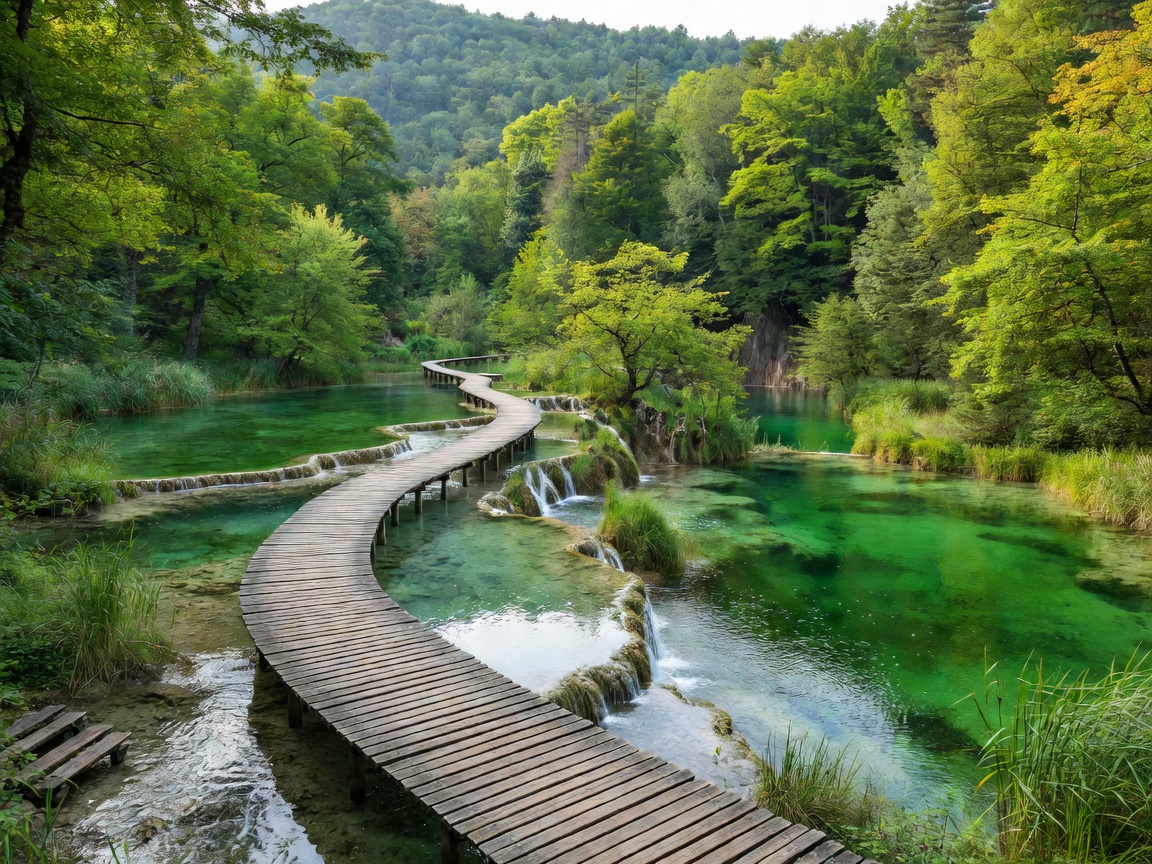
Wooden boardwalk crossing emerald terraced pools at Plitvice Lakes National Park
16Terraced lakes
78 mVeliki Slap waterfall
18 kmBoardwalk network
296 km²Protected area
The science, briefly

Why the water is that colour

The lakes sit on dolomite and limestone. Water passing through the rock picks up dissolved calcium carbonate; where the flow slows and plants, mosses and bacteria grow, that carbonate precipitates out and cements itself around the vegetation. Over centuries the deposits form travertine dams, which impound the water behind them into lakes, which then spill over into the next. The whole landscape is alive and still growing, which is precisely why you must stay on the boardwalks — a footstep on a barrier destroys structures that took decades to build.

The colours — jade, emerald, grey-green, occasionally near-black — depend on mineral content, depth, angle of light and the quantity of organic material suspended in the water. They shift not just by season but by hour. Overcast conditions, contrary to expectation, often photograph better than harsh noon sun.

Routes

Which walking programme to take

The park publishes lettered routes from Entrance 1 and numbered routes from Entrance 2. These are the three that matter.

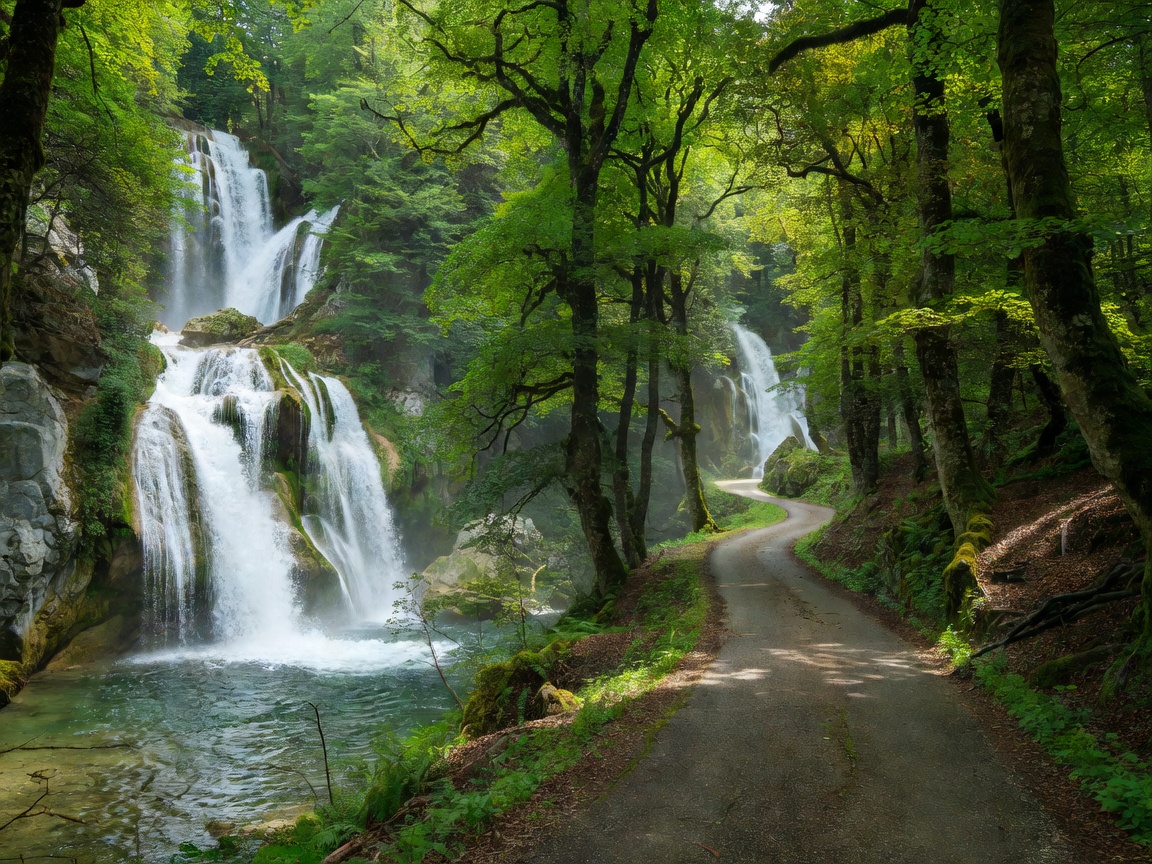
Tall waterfall pouring into a pool surrounded by forest
Best overall

Route C — Entrance 1

Lower and Upper Lakes, the big waterfall, the electric boat and the panoramic shuttle. Roughly 8 km, 4–6 hours.

  • 8 km
  • 4–6 hrs
  • Boat + shuttle
Do it clockwise from E1 Ticket info
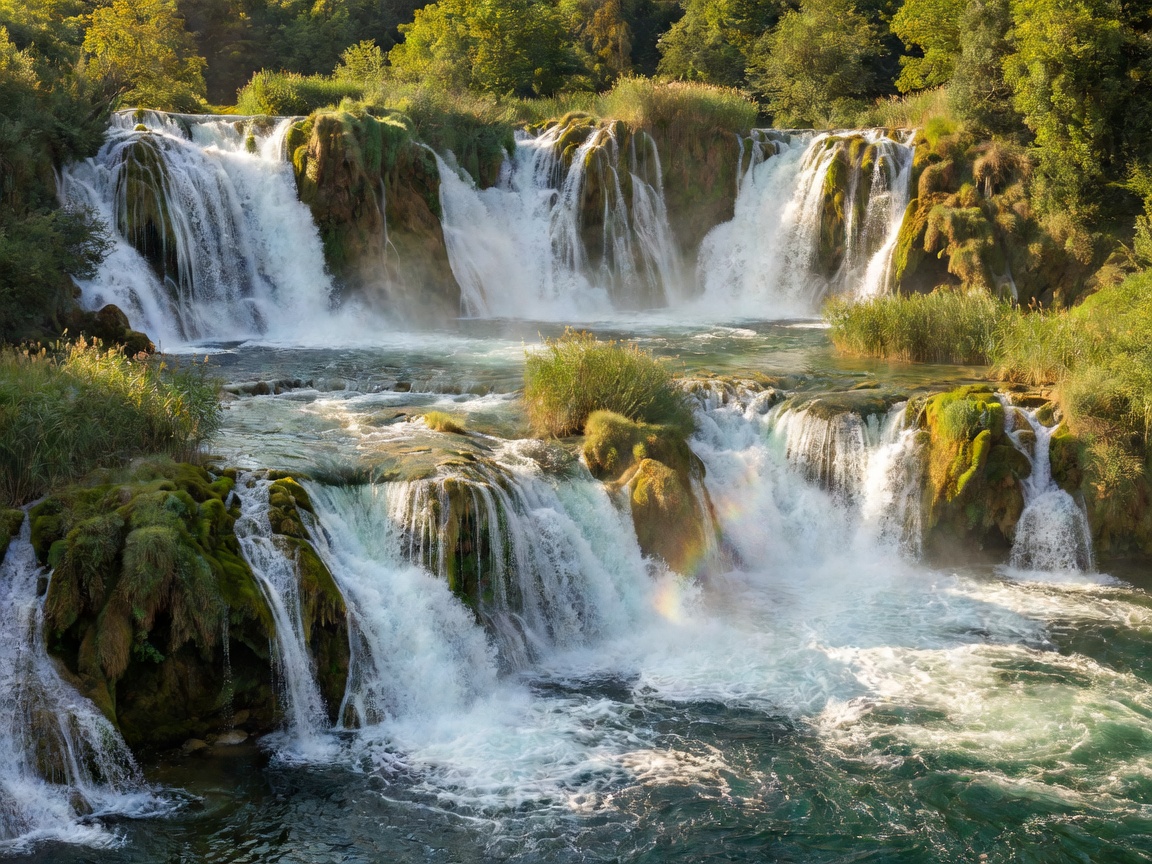
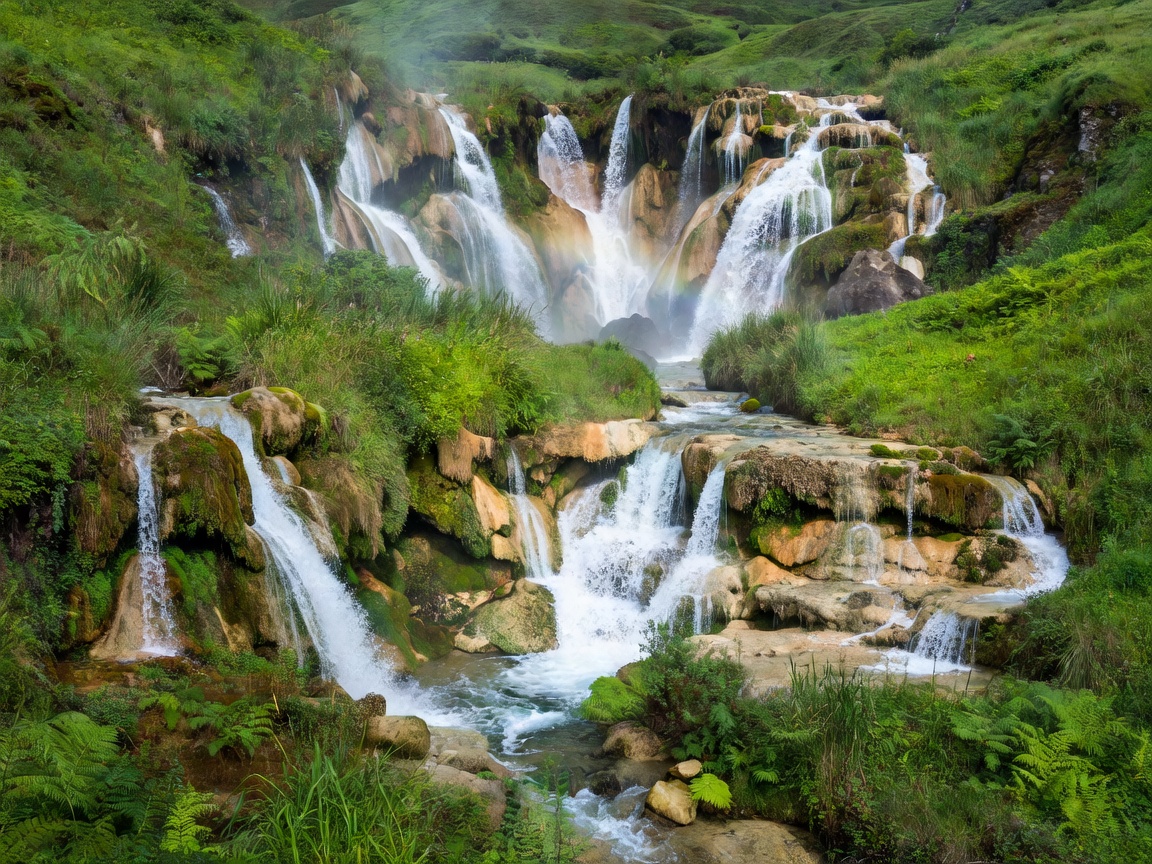
Cascade of small waterfalls stepping down a limestone terrace
Short option

Route A — Entrance 1

Lower Lakes and Veliki Slap only. Steep descent, stairs, then back up. About 3.5 km and 2–3 hours.

  • 3.5 km
  • 2–3 hrs
  • Steps
Busiest section Ticket info
Quiet forest trail beside still green water
Quietest

Route H — Entrance 2

Upper Lakes first, in the opposite direction to the coach groups. About 9 km over 4–6 hours.

  • 9 km
  • 4–6 hrs
  • Reverse flow
Our preference Ticket info
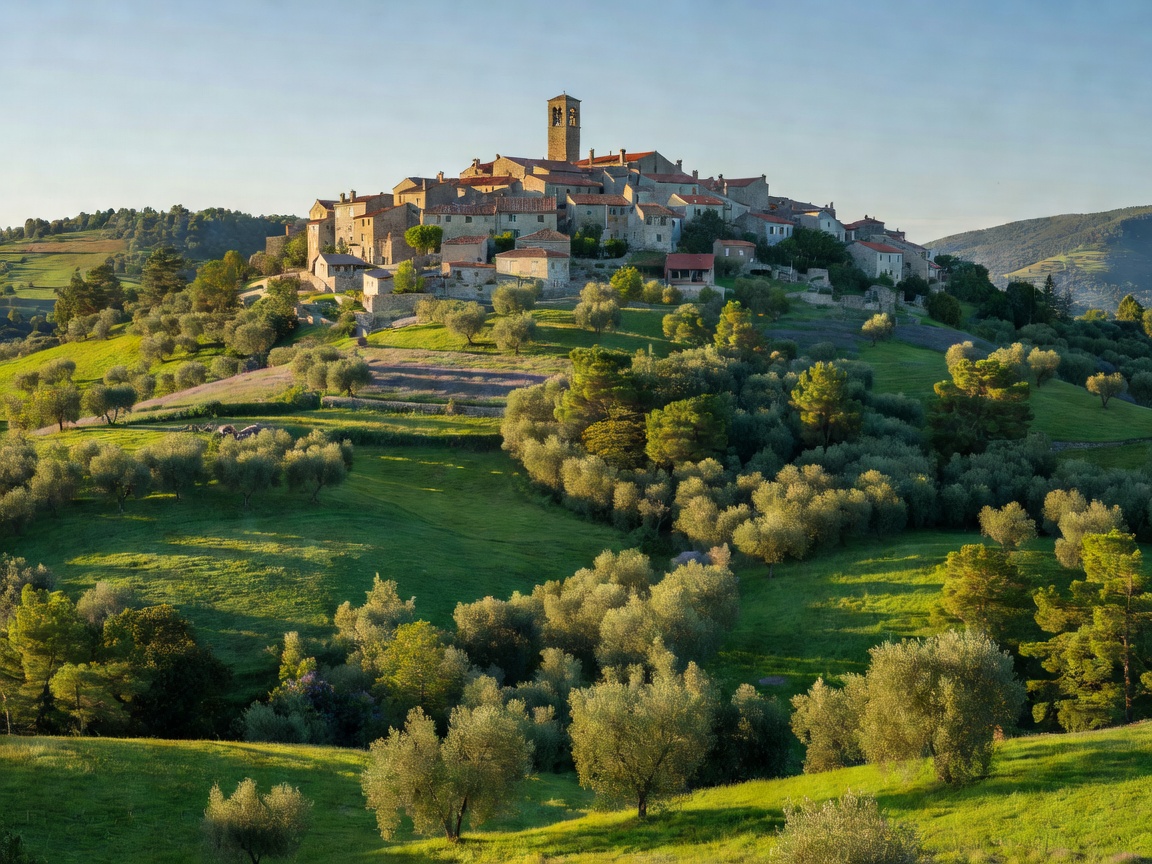
Multiple waterfalls cascading between travertine barriers in a green valley
07:00Best entry
Crowd strategy

Six rules that transform the visit

  • Book a timed slot online in advance for July and August. Same-day tickets at the gate can sell out entirely.
  • Enter at the first slot of the day. Between 07:00 and 09:00 the boardwalks are nearly empty; coaches begin arriving around 10:00.
  • Sleep nearby. Staying in Mukinje, Jezerce or Rastovača lets you be at the gate at opening instead of driving two hours first.
  • Walk against the flow. Groups are routed in a standard direction; taking Route H from Entrance 2 means you pass them rather than queue behind them.
  • Avoid weekends and public holidays — domestic visitors add substantially to numbers.
  • Allow the whole day. The boat and shuttle have their own queues, which are frequently longer than the walking sections.

Spring brings maximum water volume and green intensity; October gives beech and hornbeam colour with far fewer people; winter can be spectacular when the falls partly freeze, though parts of the trail network close.

Practical information

Tickets, access and logistics

Plitvice Lakes National Park essentials
EntrancesEntrance 1 sits at the Lower Lakes and the big waterfall. Entrance 2 is closer to the Upper Lakes and the hotels. There is also the quieter Flora entrance in high season.
TicketsPrices vary sharply by season and time of day. In peak summer a full-day adult ticket runs to roughly €40, dropping to around €10–23 in winter and shoulder months. Children, students and afternoon-entry tickets are discounted. Buy on the official park website.
IncludedEntry covers the electric boat across Lake Kozjak and the panoramic shuttle buses. No extra fee at the pier.
Getting thereZagreb 2h by car via the A1 to Karlovac then the D1. Zadar 1h30. Split about 3h. Intercity buses stop on the main road at both entrances; check with the driver.
ParkingPaid car parks at both entrances, charged per hour. Arrive early or you will be sent to an overflow lot.
RulesNo swimming, no drones, no dogs off lead, no leaving the boardwalks, no cycling on the lake trails. Fines are issued.
What to bringGrippy shoes — the boardwalks have no handrails and become slick in rain. Water, sun protection, a light waterproof, and cash for the snack kiosks.
AccessibilityThe Upper Lakes section from Entrance 2 is the most manageable for limited mobility; the Lower Lakes involve long flights of uneven steps.

Official park website and ticket booking: np-plitvicka-jezera.hr. Always confirm current pricing and opening hours there before travelling.

Common questions

Plitvice FAQ

Plitvice is larger, more dramatic and needs a full day; Krka is easier, closer to the coast and can be done in half a day. If you have the time and only choose one, choose Plitvice. If you are based in Split or Šibenik with a single free morning, choose Krka.

No. Swimming has been prohibited throughout Plitvice for decades in order to protect the travertine and water chemistry. Krka permitted swimming near Skradinski Buk historically but has also restricted it — check current rules before packing a towel.

From Zagreb, yes — two hours each way is manageable if you leave by 06:00. From Split it is a long day at roughly three hours in each direction, and you will arrive at the worst possible time. Better to stay overnight nearby or visit while driving between the coast and the capital.

The wider park area is home to brown bears, wolves and lynx, but they avoid the busy lake trails entirely. You will see far more birds, trout and the occasional grass snake than anything with claws.